
Crawl spaces and rim joists
Vented crawl spaces can stay damp, especially after heavy rain or when ground moisture rises. We look for staining on joists, insulation issues, and airflow problems that keep humidity high.
Serving Columbia, South Carolina & surrounding areas
24/7 Emergency Response
Mold Removal · Columbia, SC
If you smell musty odors, see staining, or have had a recent leak, get a clear inspection and a containment-first remediation plan that addresses both the mold and the moisture that feeds it.
Containment-first planning
HEPA-filtered air control
Written work scope
Find the Source and Full Extent
Mold problems in Columbia often start after a plumbing leak, roof intrusion, HVAC condensation, or high indoor humidity. When conditions stay damp, mold can spread behind drywall, under flooring, inside cabinets, or around vents where you cannot see it.
A proper mold removal Columbia SC job is not a quick wipe-down. The goal is to remove contaminated materials when needed, clean and detail the remaining structure, control airborne spores during the work, and fix the moisture source so the problem is less likely to return. Our team at Water Damage Restoration Columbia SC handles residential and commercial mold remediation with an emphasis on safe containment, practical communication, and thorough cleanup.
Common signs that justify an inspection:
If the issue started with water intrusion, pairing mold work with water damage restoration is often the fastest way to dry materials correctly and prevent continued growth.
Isolate · Remove · Clean
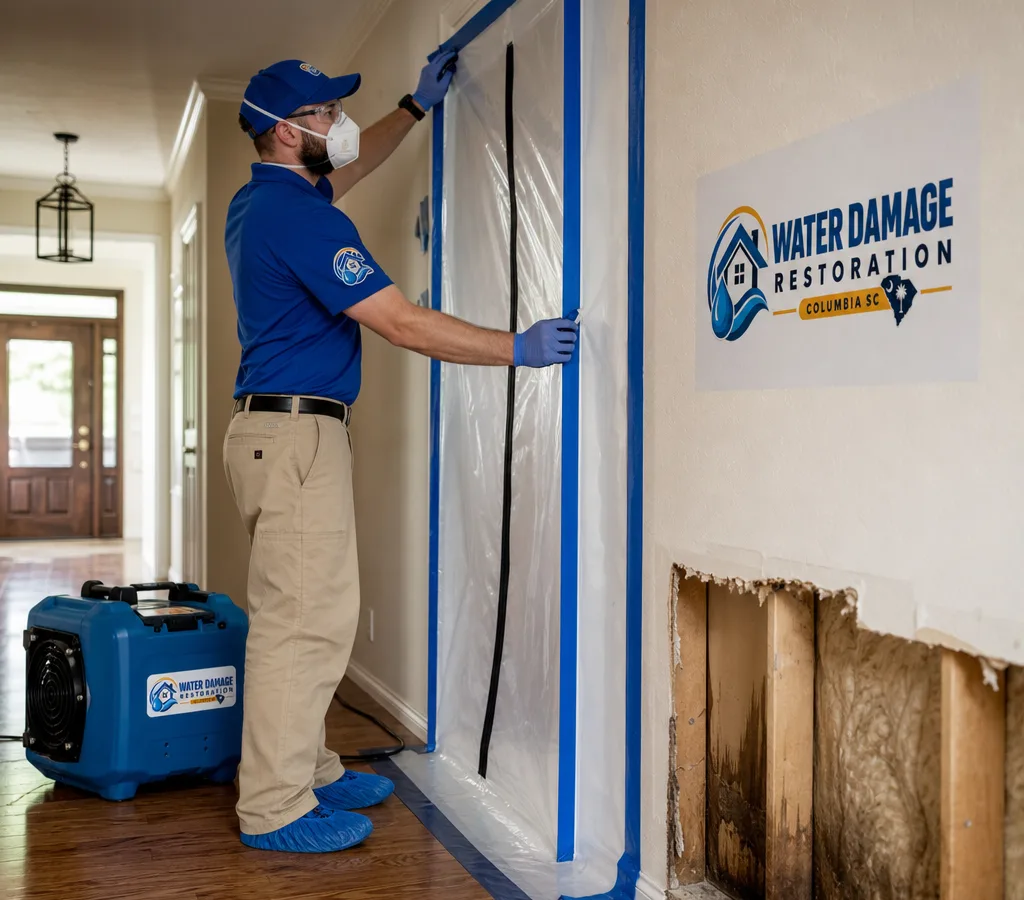
Mold remediation is about controlling what becomes airborne while work is happening. When the affected area is disturbed, spores and debris can spread into clean rooms unless the work zone is isolated.
Typical control measures, based on on-site conditions, include:
You also receive a plain-language explanation of what we found, what should be removed versus cleaned, and what needs to change—such as leak repair, ventilation, or humidity control—to stop recurrence.
Look Beyond Visible Staining
Vented crawl spaces can stay damp, especially after heavy rain or when ground moisture rises. We look for staining on joists, insulation issues, and airflow problems that keep humidity high.
Exhaust fans that vent poorly and frequent moisture can feed growth behind vanities, under vinyl, and around tubs or shower surrounds.
Slow leaks at supply lines, disposals, and dishwasher connections often create long-term dampness inside base cabinets and the wall behind them.
Small roof leaks, bathroom fan exhaust into the attic, and poor ventilation can lead to microbial growth on sheathing and truss members.
Condensate line backups, poorly insulated ducts, and air-handler leaks can dampen drywall and framing, especially near return plenums and closets.
Inspection to Final Cleanup
We identify the likely moisture source and the areas at risk. Expect targeted checks around plumbing walls, exterior walls, HVAC closets, and any area with staining or odors.
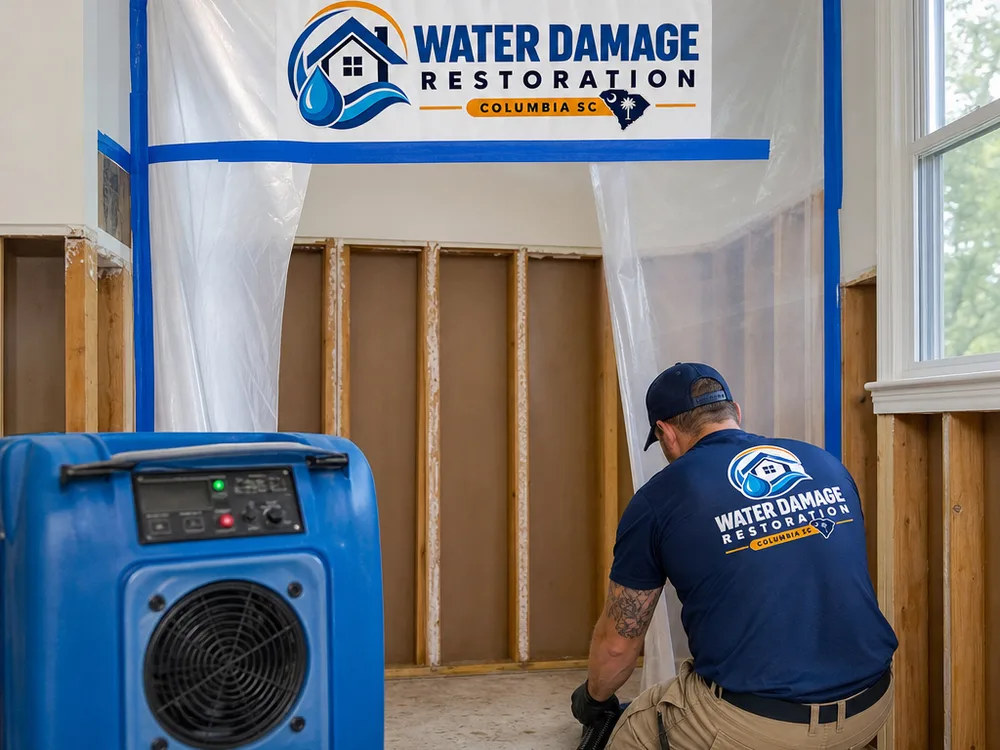
Before removal or demolition begins, we define the work zone and install containment. This is where we decide access points, protective coverings, and equipment placement.
Porous materials that cannot be reliably cleaned are removed and bagged out. Remaining structural surfaces are HEPA-vacuumed and cleaned in detail. The goal is physical removal of contamination, not masking.
If materials are still damp, we address drying and airflow. We also outline what requires correction, including leaks, condensation, ventilation, or indoor humidity that stays high.
We leave the area clean and explain any rebuild needs, such as drywall, trim, or paint, plus the practical steps that reduce the chance of mold returning.
Clear Cost Factors
Mold removal in Columbia typically ranges from about $600 to $2,500 for small to mid-size jobs, while larger remediation with demolition, containment, and multiple rooms often runs $3,000 to $8,000+ depending on what has to be removed and how far it spread.
Final pricing depends on the affected square footage, where the growth is located—such as a crawl space, attic, or inside walls—how much material needs removal, required containment and HEPA filtration, and whether drying or humidity control is needed. The exact cost is confirmed after an on-site inspection and a written scope.
If you are dealing with a musty smell, visible growth, or a recent leak, get an inspection and a clear remediation plan before you start tearing out materials or fogging the area yourself.
Call for Emergency HelpHomeowner Experiences
We had a musty odor that kept coming back after a small plumbing leak. The crew contained the area, removed the damaged drywall behind the vanity, and the smell was gone once everything dried out. They explained what caused it and what to watch for with humidity.
They were straightforward about what had to be removed versus what could be cleaned. The containment setup kept dust and debris out of the rest of the house, and the cleanup was better than I expected.
Answers Before Work Begins
Start time depends on current scheduling and how urgent the situation is, but mold work is typically prioritized when there is an active leak, wet materials, or strong odors. If you have ongoing moisture, the most important first step is getting it stopped and the area assessed so the scope is based on what is actually affected.
In many situations, removal decisions are based on visible growth, odor, moisture evidence, and the type of material affected, not on species identification. Testing can be useful when the source is unclear or documentation is needed, but practical remediation still focuses on containment, physical removal or cleaning, and fixing the moisture problem.
Many projects can be completed while occupants remain in the home, as long as the work area can be isolated and the affected space is not a critical pathway. For larger jobs, sensitive occupants, or situations where the HVAC system could pull air from the work zone, it may be smarter to limit access or temporarily relocate from the immediate area.
Yes, but access often requires controlled removal of finishes such as drywall, baseboards, or sections of flooring. The key is to open the area carefully with containment in place, remove contaminated porous materials as needed, clean remaining structural surfaces, and dry the cavity so mold does not continue to grow after it is closed.
Bleach can discolor some surface growth, but it does not reliably solve mold in porous materials such as drywall, wood, or grout because it does not penetrate evenly and does not address the moisture source. Permanent results depend on appropriate removal or cleaning and correction of the conditions that stayed damp.
Mold commonly returns when the underlying moisture remains, such as a slow plumbing leak, recurring condensation, high indoor humidity, or wet building materials that never fully dried. A remediation plan should include moisture-control steps, not only cleaning, so the same problem does not continue.
Yes. Commercial mold remediation often requires tighter scheduling, clearer documentation, and careful containment so nearby offices or customer areas can continue operating. The scope still comes down to the same fundamentals: find the moisture, isolate the area, remove or clean correctly, and dry the structure.
Containment Starts With a Plan
Tell us what you are seeing and where it is happening. We will schedule an inspection, explain the containment and cleanup approach, and provide a written scope that addresses both removal and moisture control.