
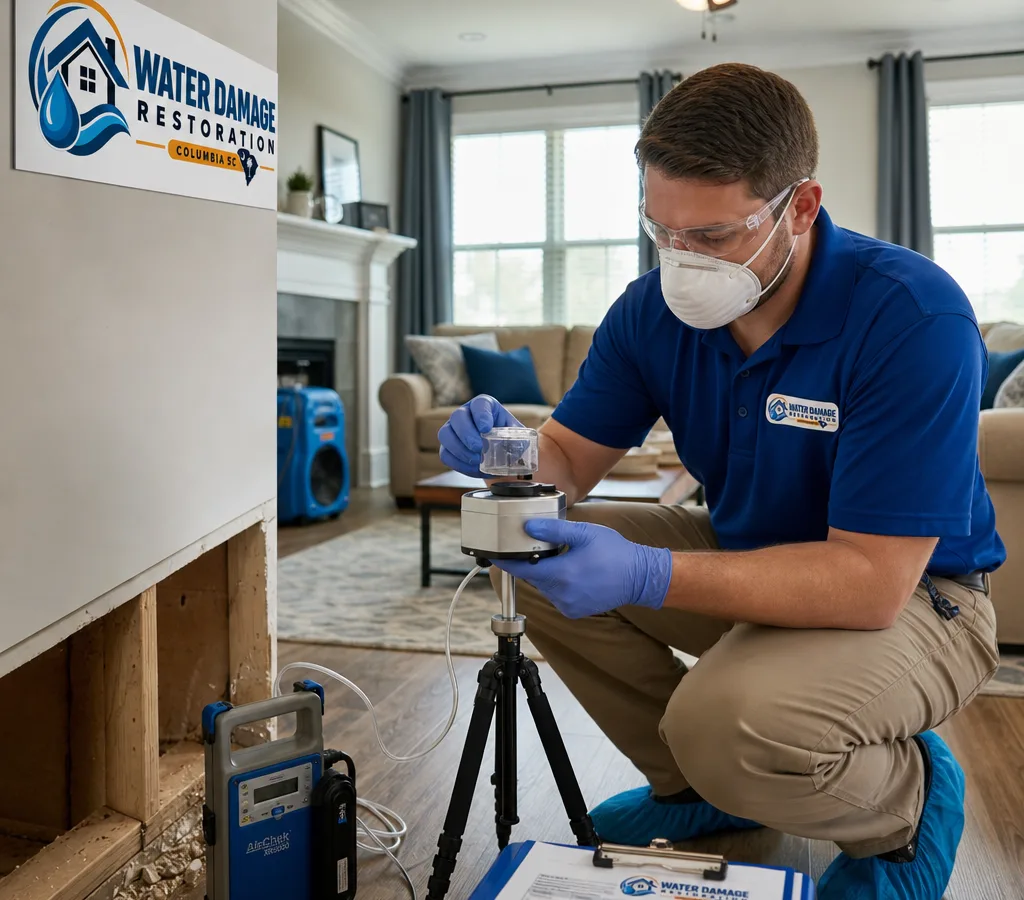
Indoor air sampling (spore trap)
Captures airborne spores over a measured volume of air. It helps compare rooms, check a problem area, or evaluate indoor air relative to an outdoor control sample.
Serving Columbia, South Carolina & surrounding areas
24/7 Emergency Response
Mold Testing · Columbia, SC
Get clear, defensible results with professional sampling and a written summary you can use to make next-step decisions for your home or building.
Professional sampling
Laboratory analysis
Written results
If you are searching for mold testing Columbia SC, you usually need one of two things: confirmation that mold is present, or evidence that an odor, moisture issue, or past leak is not creating a mold problem.
Testing makes sense when:
Columbia's long warm season and humidity mean moisture problems can show up fast once a material stays damp. Testing measures what is in the air and on surfaces today, then connects those findings to what we observe on-site.
Inspection Before Sampling
A proper mold inspection starts with the building, not the lab. We look for the moisture source and conditions that let mold grow, then decide which sampling will answer your question.
Typical components include:
What testing does not do: Testing cannot permanently fix moisture or replace correction of a hidden leak or chronic condensation. Useful reporting pairs lab data with on-site findings.
Sample With Purpose
Captures airborne spores over a measured volume of air. It helps compare rooms, check a problem area, or evaluate indoor air relative to an outdoor control sample.
Used when there is visible suspect growth or staining. Surface sampling can confirm whether a spot is mold and support a targeted cleanup plan.
An outdoor sample provides context for what is naturally present that day, helping us interpret indoor results more responsibly.
When conditions suggest hidden growth, we focus on likely pathways and sample strategically rather than randomly.
You receive a straightforward summary of findings, sample locations, and practical next steps based on moisture, materials, and accessibility.
Question to Written Results
We clarify whether you need to confirm a suspicion, check a room, document conditions for a transaction, or guide a cleanup plan.
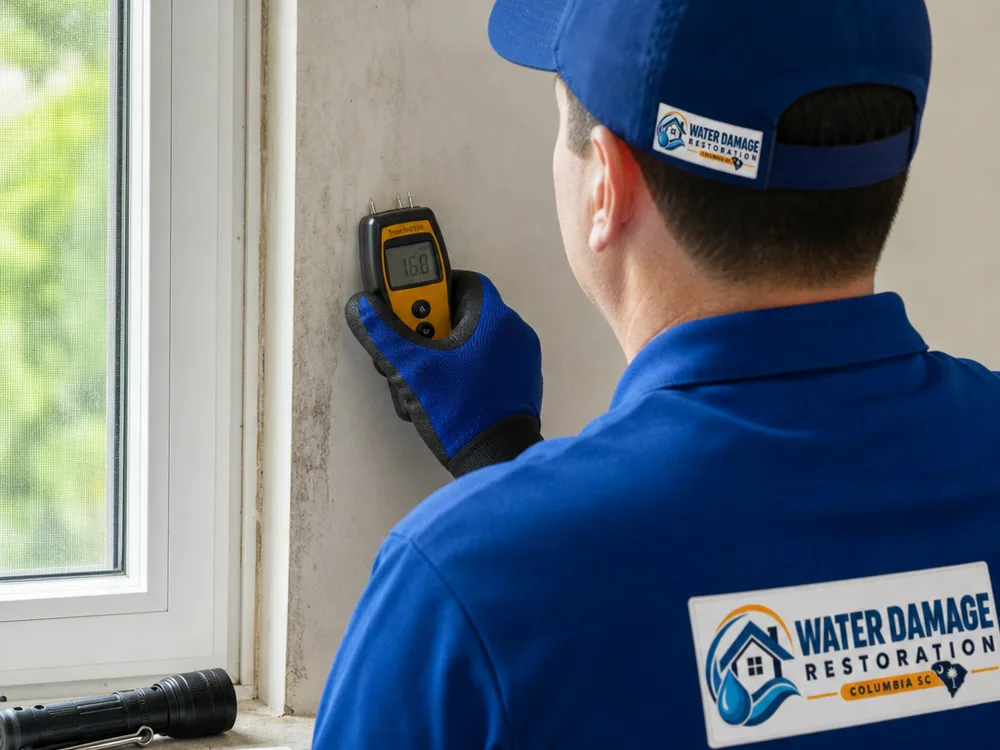
We walk the areas of concern, note contributing building conditions, and take readings to identify damp or at-risk materials.
We collect the appropriate air and surface samples, label each location, and complete chain-of-custody paperwork.
Samples are analyzed by a qualified laboratory. We review the results alongside site conditions so the numbers have building-specific context.
You receive findings, helpful photos, and practical recommendations. Active moisture must be corrected before cleanup can be considered complete.
Clear Cost Factors
Mold testing in Columbia typically ranges from about $250 to $750 for most homes, depending on how many areas are sampled and whether surface sampling is needed. A basic visit with a small number of air samples is usually on the lower end, while larger homes, multiple floors, crawlspaces, or several suspect areas push the total higher.
Price mainly changes with sample count, access to attics or crawlspaces, the extent of moisture mapping, and how much documentation you need for a transaction or next-step planning. Exact cost is confirmed at the inspection after the sampling plan is set.
Columbia Property Conditions
Mold is a moisture problem first. In the Columbia area, conditions that support growth often develop in places people rarely inspect until an odor appears.
After a leak or stormwater event, it helps to review what was dried, replaced, and potentially left wet inside walls or beneath flooring. Documentation and moisture verification should be completed before materials are closed.
Request Emergency ServiceIf you are deciding whether you need testing, start with the areas you are worried about and any moisture history. We will recommend an approach that answers your question without over-testing.
Call for Emergency HelpAnswers Before Sampling
Scheduling depends on current demand, but many inspections can be arranged within a few business days, with faster options sometimes available for time-sensitive situations such as real estate timelines. Sharing the rooms of concern, visible growth, and recent leak history helps us plan correctly.
Air samples are useful when you suspect an indoor air issue such as an odor or unknown source. Surface samples are useful when you have a specific spot to identify. Many Columbia homes benefit from a combination of an outdoor control, key indoor air samples, and targeted surface sampling where suspect growth is visible.
Yes in most cases. Normal operation helps represent typical living conditions, particularly when your concern is odor or irritation while the system runs. Mention visible growth near a vent or a recently changed filter when scheduling.
Often, depending on access and what you need to confirm. Targeted sampling and moisture readings can help determine whether a small access point is justified rather than removing large sections of drywall.
The next step is to identify and correct the moisture source, then plan remediation around where growth is present and which materials are affected. If removal is needed, containment and proper cleaning methods matter as much as the lab results.
Provide access to areas of concern, including attic or crawlspace entrances. Avoid heavy cleaning or strong fragrances on the day of inspection, note recent leaks or repairs, and have any photos from prior water events available.
Clear Findings, Practical Direction
Tell us what you are noticing and where. We will inspect the conditions, collect the right samples, and provide a written summary you can use to decide what happens next.