Moisture readings you can understand
We document what is wet, how wet it is, and where it is moving, then explain the drying plan in plain language.
Serving Columbia, South Carolina & surrounding areas
24/7 Emergency Response
Water Damage Restoration · Columbia, SC
When water gets into floors, drywall, or cabinets, time matters. Our local technicians respond fast with professional drying, cleanup, and repair planning to limit damage and get your space back to normal.
Moisture mapping
Professional drying
Clear documentation
Control · Document · Dry
If you are searching for water damage Columbia SC help, you likely need two things right away: the water stopped and a clear plan to dry the structure before rot, corrosion, and microbial growth set in. Water Damage Restoration Columbia SC handles residential and commercial water damage restoration with a focus on fast dry-out, careful material decisions, and documentation that supports insurance conversations.
In the Columbia area, water damage commonly comes from supply line breaks, overflowing tubs and toilets, failed appliance hoses, roof leaks during storms, and HVAC drain or condensate issues. Any of these can push water into wall cavities, under floating floors, and into subfloor layers where it is not visible from the surface.
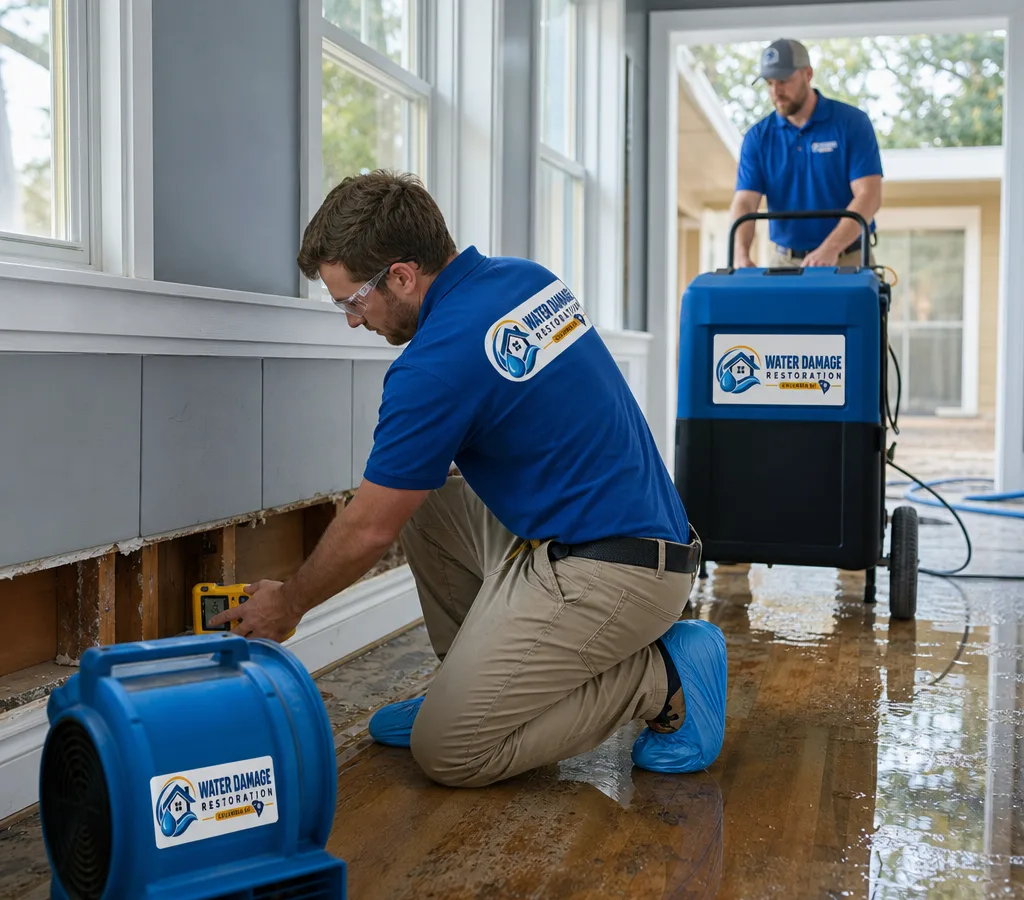
Drying is not just running fans. A proper approach uses moisture mapping, dehumidification matched to the space, and controlled air movement so the structure dries evenly.
Our team works throughout Columbia, including properties near Downtown and The Vista where mixed-use buildings and shared walls can complicate containment, as well as neighborhoods like Shandon where older plaster, hardwood floors, and layered assemblies often need more careful drying decisions. In Northeast Columbia, slab-on-grade homes and attached garages can hide water migration along edges and under flooring. We also serve properties toward Irmo and Lexington where damage may be discovered hours after the initial leak.
Start With the Source
The first job is to control the source and protect the structure. If water is still active, we help you identify what needs to be shut off and isolate affected areas to keep moisture from spreading.
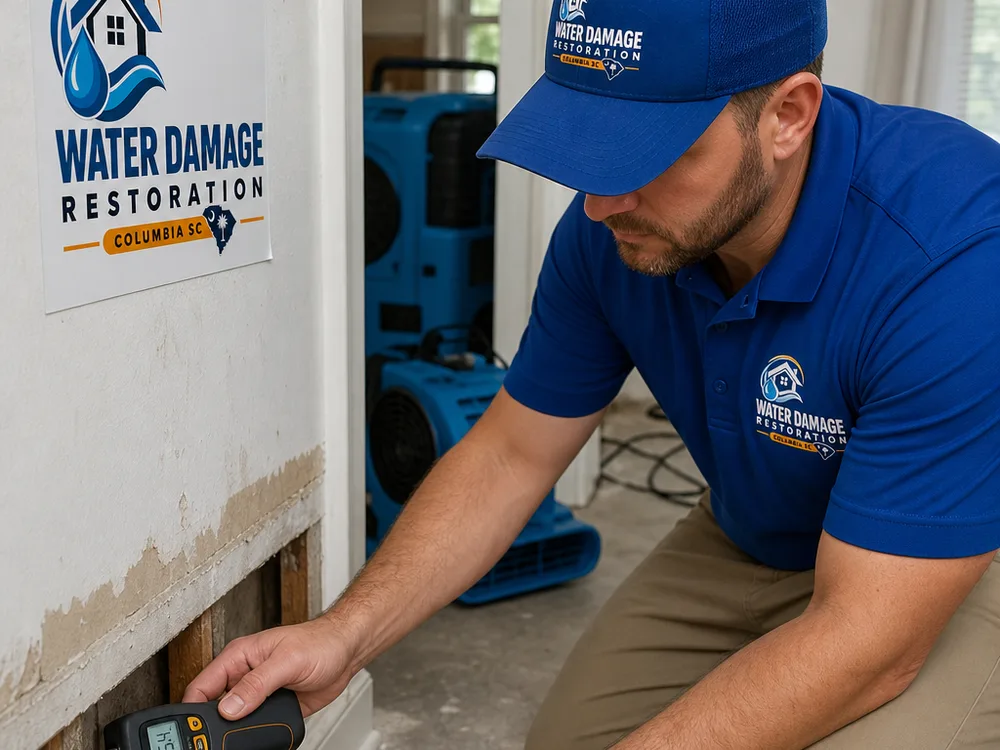
Next comes inspection and moisture mapping. We check building materials with professional moisture meters and track where water has moved, including baseboards, drywall edges, door thresholds, and beneath flooring transitions. This step drives the drying plan.
Drying and dehumidification is then set up to match the loss. Air movers, dehumidifiers, and targeted drying techniques are placed based on readings, not guesswork. We monitor and adjust as conditions change.
If materials are not salvageable or would slow drying, we remove them in a controlled way. That can include wet drywall, insulation, swollen baseboards, saturated carpet pad, and compromised laminate or engineered flooring. Contents are protected and moved as needed.
Finally, we leave you with a clear scope for repairs. Some clients want us to handle the rebuild, while others use their preferred contractor. Either way, you get an organized plan tied to what was wet and what was removed.
Measured, Controlled, Documented
We document what is wet, how wet it is, and where it is moving, then explain the drying plan in plain language.
We protect unaffected rooms, manage debris carefully, and keep work areas organized so the rest of the property stays usable.
Air movement and dehumidification are set for the size and type of loss, then adjusted based on daily conditions and readings.
We identify which assemblies are likely to trap moisture so you do not seal water in and end up reopening walls later.
We can provide a clear scope, photos, and drying notes that help support the claim conversation and approvals.
Find the Full Extent
Water damage is often bigger than it looks. A small leak at a refrigerator line can travel along the wall plate and show up several feet away. A toilet overflow can soak into the base of cabinets and under tile transitions. A roof leak can run down framing and collect at the bottom of an exterior wall.
The key risks we watch for are:
Because of these risks, we focus on early containment, rapid extraction, and controlled drying. In water damage Columbia SC projects, we often see the best outcomes when the drying plan starts before secondary issues have time to develop.
Water Damage Restoration Columbia SC works with homeowners, property managers, and businesses across Columbia.
Extraction to Repair Scope
We assess for electrical hazards, ceiling sag, and slip risks, then stabilize the area so work can start safely.
We remove standing water and address obvious wet materials first to stop ongoing absorption into flooring and drywall.
We map affected materials, set drying goals, and place equipment based on the structure, not just the room layout.
We track progress with moisture readings and adjust airflow and dehumidification as the project moves from wet to damp to dry.
If materials cannot be dried properly or are already compromised, we remove them and outline what it will take to rebuild correctly.
Clear Cost Factors
Water damage restoration in Columbia typically ranges from about $900 to $4,500 for smaller, contained losses, while larger projects with multiple rooms, significant demolition, or extended drying can run $6,000 to $15,000+.
Final cost depends on the category and amount of water, how long materials stayed wet, what must be removed, access to affected areas, equipment days, and whether repairs are included. The exact price is confirmed after an on-site inspection and documented moisture readings.
Home and Business Experiences
A supply line leak soaked our kitchen and part of the living room. They showed us the moisture readings, set up drying the same day, and kept checking until everything hit dry numbers. The repair scope was clear and matched what insurance needed.
Our office had water travel under the flooring overnight. They contained the area, dried it properly, and helped us plan the repair work so we could reopen quickly without cutting corners.
Answers Before Work Begins
Drying should start as soon as it is safe and the source is controlled, ideally the same day. In Columbia's warm, humid conditions, wet building materials can hold moisture and develop odor and growth issues quickly, so early extraction and dehumidification usually reduces how much material must be removed.
Sometimes, but it depends on the flooring type, the subfloor, and how long it stayed wet. Solid hardwood may be salvageable with controlled drying and monitoring, while many laminates and some engineered products swell or delaminate and often need replacement to prevent long-term buckling and odor.
Stop the water if you can do so safely, avoid rooms with ceiling sag or electrical risk, and move small valuables away from wet areas. If the water came from a toilet overflow or other contaminated source, keep people and pets out of the area and avoid running fans that could spread contaminants.
Yes, we can provide photos, moisture documentation, and a written scope that supports the claim review. Coverage depends on your policy and the cause of loss, so we focus on documenting conditions clearly and keeping the work aligned to what is needed to dry and restore the structure.
Many drying phases take about 3 to 5 days, but timelines vary based on how much water entered the structure, what materials are affected, and whether demolition is required. Repairs can add additional time depending on flooring lead times, drywall finishing, and paint cure schedules.
Yes. Commercial spaces often need tighter containment, off-hours work, and coordination with building management to protect neighboring suites. We plan drying setups to keep pathways clear and help you prioritize what must be restored first to reduce downtime.
Start the Drying Plan
Tell us what happened and what areas are affected. We will confirm next steps, inspect and document the moisture, and lay out a drying and repair plan that fits your property.