Supply line and burst pipe events
Pressurized water can soak insulation and wall cavities fast. The goal is to extract immediately, open trapped areas when needed, and dry framing and subfloors before swelling and delamination spread.
Serving Columbia, South Carolina & surrounding areas
24/7 Emergency Response
Water Restoration · Columbia, SC
When water gets into floors, drywall, or cabinets, fast action matters. Get a clear plan for drying, cleanup, and repairs so your home can get back to normal with less risk of mold and material damage.
Moisture mapping
Controlled structural drying
Post-dry verification
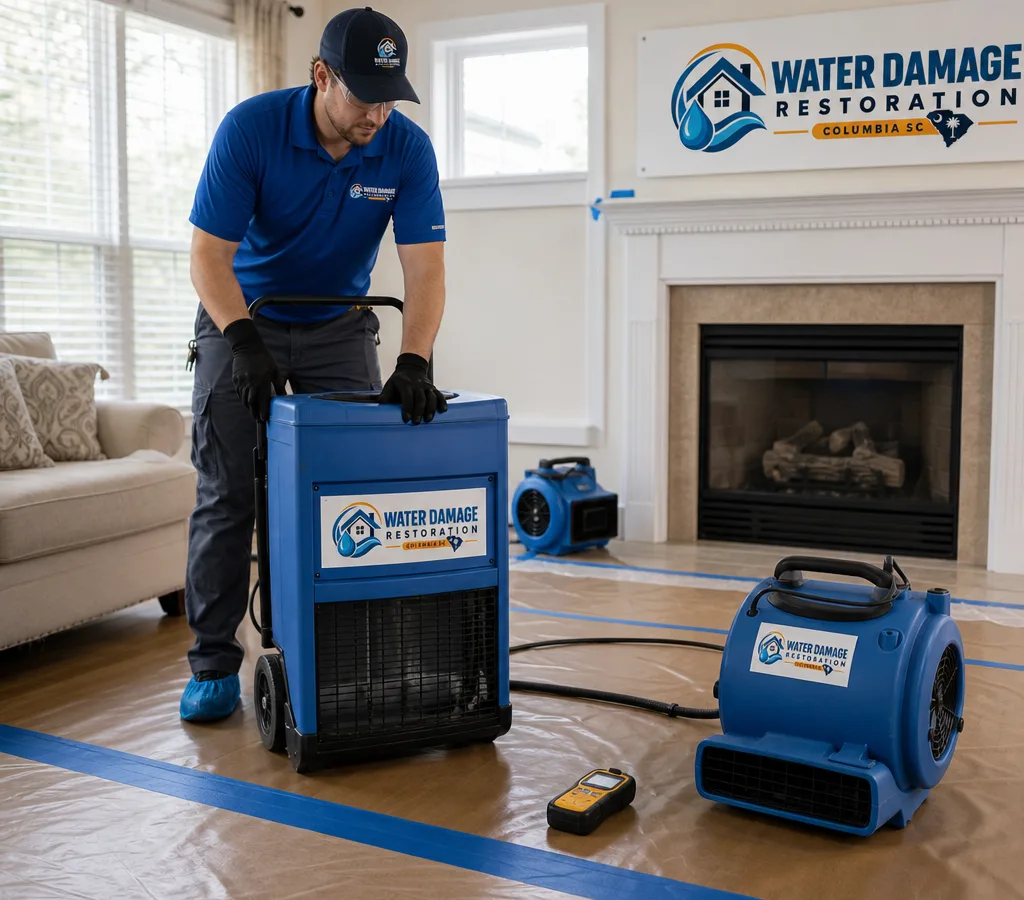
If you searched for water restoration Columbia SC, you are probably dealing with a leak, overflow, storm water, or a burst supply line and you need the water out and the structure dried correctly. Water restoration is more than extraction. It is a controlled drying process that tracks moisture in materials, removes unsalvageable items, protects adjacent rooms, and documents what happened so repairs can start.
Water Damage Restoration Columbia SC works across Columbia and the 29204 area with an on-site, step-by-step approach: identify the water source, stop further spread, extract standing water, set drying equipment, and verify moisture levels before rebuild work begins. You get straight answers on what can be saved, what cannot, and what the next few days will look like.
Dry the Building, Not Just the Surface
A proper water restoration job is built around drying the building, not just making surfaces look dry.
Typical scope can include:
Columbia's warm, humid conditions can slow evaporation and raise the risk of secondary damage if a space is not dried and ventilated correctly. That is why monitoring matters. We track readings and adjust equipment so the structure reaches a dry standard before repairs are finalized.
Leak to Verified Dry
Pressurized water can soak insulation and wall cavities fast. The goal is to extract immediately, open trapped areas when needed, and dry framing and subfloors before swelling and delamination spread.
Dishwashers, ice makers, and air handler condensate issues often cause slow, hidden moisture. We focus on moisture mapping so you are not repairing over a wet pocket.
If water is contaminated, cleanup must follow stricter handling, removal, and disinfection steps. We explain what materials are typically non-salvageable and why.
Wind-driven rain can wet ceilings, insulation, and walls. Drying is planned to prevent sagging drywall and reduce the chance of odor and microbial growth.
Water under flooring or in a crawl space can keep humidity elevated for days. Dehumidification and airflow planning are key to getting the structure truly dry.
Inspection to Verification
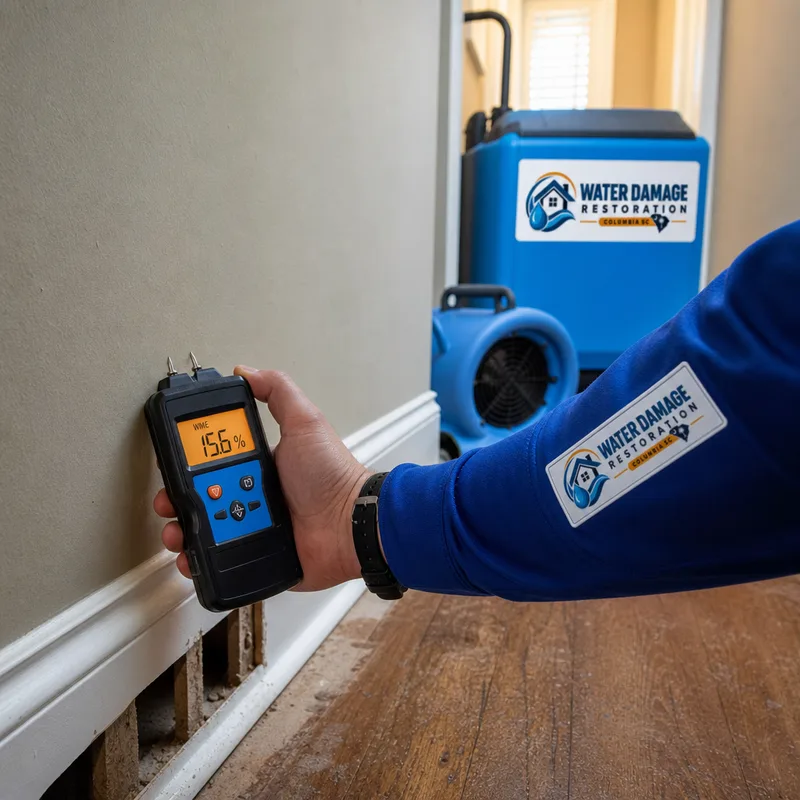
We identify affected materials, look for hidden migration behind baseboards, under flooring, and inside wall cavities, and note safety concerns. You receive a clear scope of what needs to happen first.
We extract standing water, protect floors and pathways, and set containment when dust or debris is expected. The goal is to keep mess and moisture from spreading into dry rooms.
Air movers and dehumidifiers are placed based on the materials and room geometry, not by guesswork. We monitor moisture readings and adjust equipment placement as drying progresses.
If insulation is saturated or drywall cannot dry in place, we remove only what is needed, such as flood cuts. This prevents trapped moisture from staying in the structure.
After drying targets are met, we clean affected surfaces and address odor sources. We verify materials are dry enough for repair work so moisture is not sealed back into the building.
Clear Cost Factors
Water restoration in Columbia typically ranges from about $1,000 to $6,000+ depending on how far the water spread and what materials were affected. A small, contained incident with one room and limited wet drywall often lands on the lower end, while multi-room drying, saturated flooring, or contaminated water can push costs higher.
Final price changes with square footage, water category, how long materials stayed wet, access such as crawl spaces and stairs, equipment days, and how much removal and disposal is required. Exact costs are confirmed after an on-site inspection and moisture mapping.
Water damage behaves differently depending on building style and how water can travel.
Forest Acres: Mature landscaping and older plumbing tie-ins can contribute to wall leaks where moisture wicks along base plates and appears far from its source.
Shandon and Rosewood: Hardwood flooring, plaster, and older drywall assemblies can react quickly, making careful airflow important for reducing cupping and swelling.
Downtown Columbia: Condo and apartment water events may affect multiple units vertically, so containment, documentation, and property-management coordination matter.
Northeast Columbia: Open layouts and continuous flooring can let water travel quickly across several rooms, making prompt extraction and equipment placement especially important.
When comparing providers, ask how they will measure and verify drying. A written scope, moisture readings, and a clear explanation of what will be removed versus dried in place help protect against repeat damage.
If your property is wet right now, the most helpful next step is an on-site assessment with moisture mapping, so you know what needs drying, what needs removal, and what a realistic timeline looks like.
Call for Emergency HelpAnswers Before Work Begins
You should start water removal and drying as soon as it is safe because moisture can move into drywall, insulation, and subfloors quickly. In Columbia's humid weather, delaying drying often means more material has to be removed later. If the water source is still active, stopping it and protecting electrical safety come first, then extraction and drying setup.
Water mitigation is the immediate work to stop further damage, including extraction, drying equipment, and selective removal. Water restoration is the broader job that brings the space back to pre-loss condition, which can include cleaning, repairs, and rebuilding after moisture levels are verified. Many projects involve both phases, but drying verification is the key handoff point.
Sometimes drywall can dry in place if it is minimally affected and readings show it is drying evenly, but saturated insulation usually cannot be effectively dried and often needs removal. The decision depends on water category, how long it was wet, and whether moisture is trapped in a cavity. We confirm with moisture readings rather than relying on appearance.
Many residential drying jobs take about 3 to 5 days, but timelines vary based on the materials, the amount of water, and whether moisture is trapped behind finishes or under flooring. After extraction, we monitor moisture and adjust equipment; drying is considered complete when readings reach a dry standard appropriate for the material.
Coverage depends on the cause of loss and your policy terms, but sudden events like a burst supply line are often handled differently than long-term seepage. Document the damage early, keep any photos you have, and get a written scope after inspection so you have clear documentation for the claim conversation.
If it is safe, shut off the water source, avoid rooms with standing water near outlets, and move small valuables and papers to a dry area. Do not run household fans into wall cavities or remove materials blindly because it can spread contamination or miss hidden wet areas. A professional assessment with moisture mapping is the fastest way to avoid drying the wrong areas while missing wet ones.
Start With Moisture Mapping
Tell us what happened and what areas are affected. We will schedule an inspection, map the moisture, and lay out a drying and restoration plan you can make decisions from.